Work Case 04 Creative tools
Paid ads were
mathematically impossible.
At $9 a month, a $38 blended CAC puts you underwater before you have paid for a single server. Airbrush didn’t have a marketing problem. It had an arithmetic problem. So we stopped making ads about the product and made the product’s output be the ad.
01 · Context
A great product trapped by its own price.
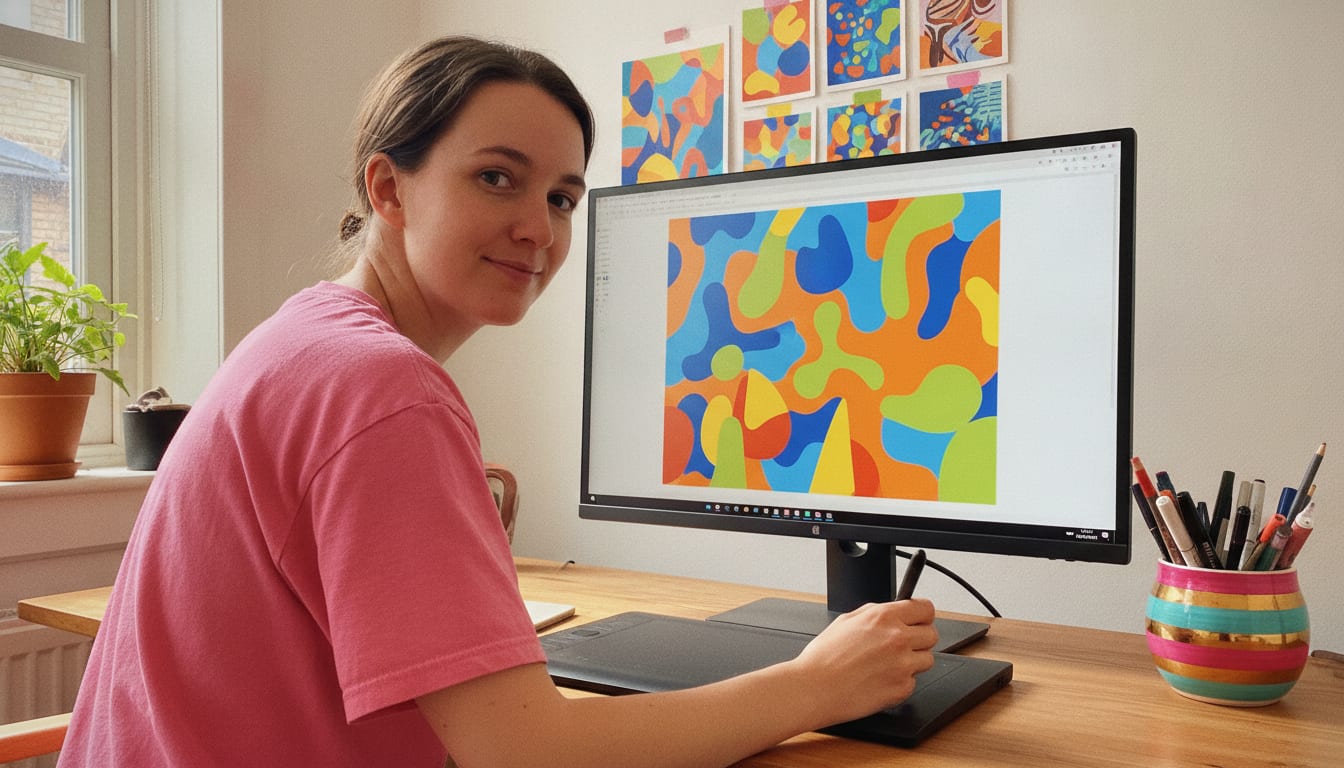
Airbrush is an AI image generator: art, photorealism, anime, 3D renders, game assets, logos. Fifteen-plus engines including Stable Diffusion and DALL·E, face swap, character design, 4× upscaling, commercial rights on everything you make. Free tier at 20 credits, premium at $9 a month.
That $9 is the entire story of this campaign.
It is a genuinely good price for the user and a brutal one for the marketer. It sets a hard ceiling on what you can pay to acquire someone, and that ceiling sits well below what paid social costs. Airbrush wasn’t failing to market itself. It was structurally locked out of the channels everyone else uses.
02 · The arithmetic
Why we told them not to run paid ads.
This is the chart we built before agreeing to the campaign. It’s also the chart most $9–$15 products have never made.
View as table
| Metric | Paid social | HiveMind |
|---|---|---|
| Blended CAC | $38.40 | $4.32 |
| Lifetime gross profit | $39.85 | $39.85 |
| LTV : CAC | 1.04 : 1 | 9.22 : 1 |
| Payback period | 5.2 months | 15 days |
03 · The hypothesis
The product is already the content.
Most software has to be explained. Airbrush doesn’t. Its output is a finished image, visually arresting, instantly comprehensible, and impossible to scroll past. Every generation the product makes is, structurally, a hook.
Which means the usual creative approach (a person on camera explaining why the tool is good) was actively wasting the strongest asset available.
Campaign hypothesis
Lead with the output. Reveal the tool late. Say nothing at all. Open on the finished image before the viewer knows what they are watching. Let curiosity carry the first eight seconds. Only then show the prompt that produced it. No presenter, no voiceover, no claims, just the result, the method, and a trending audio track.
We called it the silent demo, and it had a second-order effect we hadn’t fully priced in: with no spoken language, the creative was market-agnostic. The same video performed in Manila, São Paulo, Berlin and Ohio without a single change.
That unlocked the international creator pool at a scale no other campaign in the portfolio could use, which is why this campaign holds the lowest CPM we have ever recorded.
04 · The silent demo
No presenter. No script. No language.


28 international, 19 US
The most international-weighted campaign in the portfolio, the exact inverse of the fintech work. Language-free creative removes the market barrier that normally forces US-heavy casting.
$4.23 per video
No scripting, no performance, no talent direction. A silent demo is a screen recording with a good first frame, which is why we could afford 4,120 of them.

05 · Results
What 21-cent attention buys.

06 · The pattern across all four
CPM is set by your category, not your budget.
Four campaigns, four wildly different costs per view. The spread isn’t random, and knowing where you sit on it is the difference between a realistic plan and a disappointed board.
View as table
| Campaign | CPM | CAC | Price point | Payback |
|---|---|---|---|---|
| Airbrush | $0.21 | $4.32 | $9/mo | 15 days |
| AI4Chat | $0.29 | $5.86 | $40/mo | 5 days |
| PolyPick | $0.61 | $14.88 | $39/mo | 12 days |
| Writecream | $0.88 | $13.27 | $34/mo | 12 days |
What this means for your forecast
We quote a CPM range in every audit based on where your product sits on these three variables, not on our best campaign. If you have been shown a single flattering CPM from a completely different category as your projection, you have been sold a number, not a plan.
07 · Unit economics
The board slide.
| Total creative spend | $17,409 |
| Videos produced | 4,120 |
| Effective cost per video | $4.23 |
| Views delivered | 82,900,000 |
| Cost per 1,000 views (CPM) | $0.21 |
| Accounts created | 212,224 |
| Paying customers acquired | 4,032 |
| Blended CAC | $4.32 |
| Subscription price | $9 / mo |
| LTV : CAC | 9.22 : 1 |
| CAC payback period | 15 days |
| Net-new MRR | $36,288 |
| Net-new ARR | $435,456 |
| Return on creative spend | 25.0× |
08 · What it proves
Three transferable conclusions.
1. Low price points aren’t a marketing problem. They’re a channel-selection problem.
If your product is under about $15 a month, paid social is probably structurally unprofitable for you, and no amount of creative optimisation fixes arithmetic. Draw the LTV-versus-CAC chart before you spend anything.
2. If your product has visual output, the presenter is costing you money.
Silent demos converted 18% worse per click and produced 3.4× more signups per dollar. Removing the human removed the language barrier, the production cost and the scripting cycle all at once.
3. A worse conversion rate on much cheaper attention still wins.
This is the single hardest idea to sell to a performance marketer trained on paid media, where impressions are expensive and every click must be defended. When attention costs 21 cents per thousand, the optimisation target changes completely. You stop protecting conversion rate and start buying volume.
Where this transfers
Any product with visual, audio or otherwise self-evident output: design and creative tools, video editors, photo apps, game assets, music tools, home and interior products, food, fashion, and physical goods where the result speaks without translation.
Start again
$0 to $61,400 MRR in 31 days.
PolyPick: the hardest vertical in creator marketing, and a Domain Rating of 1.
Free distribution audit
Is paid social quietly underwater for you?
We’ll draw the LTV-versus-CAC chart for your product, estimate a realistic CPM range for your category, and tell you honestly whether creator distribution changes the maths.